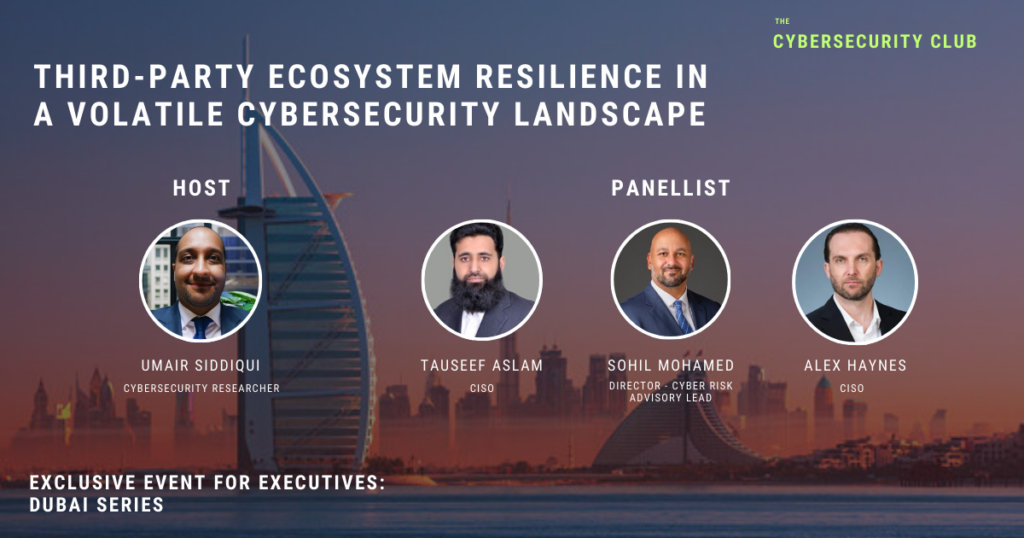
A recent webinar brought together cybersecurity experts to delve into the critical topic of third-party ecosystem resilience in today’s volatile cybersecurity landscape. The discussion highlighted the increasing complexity of global supply chains and the significant cybersecurity threats organizations face from their third-party ecosystem, including ransomware attacks, software supply chain vulnerabilities, and insider threats.
Panelists Alex Haynes and Sohil Mohamed emphasized that ransomware remains a significant threat, evolving from data encryption to data theft. They also underscored the often overlooked geopolitical risks in the supply chain, citing examples like the Russia-Ukraine conflict and sanctions impacting technology vendors. Sohil Mohamed stressed the importance of viewing cybersecurity as a business enabler and integrating third-party risk management (TPRM) with ESG and overall supply chain considerations. He cautioned against solely relying on a third party’s reputation and advocated for independent testing and robust incident response plans. Tauseef Aslam added that the interconnected nature of the modern digital world, reliance on partnerships, and vulnerabilities in commonly used software amplify third-party risks. He used the example of widespread vulnerabilities in operating systems to illustrate this point.
The discussion then shifted to actionable strategies for strengthening resilience and risk mitigation. Alex Haynes critiqued traditional questionnaires and highlighted the benefits and limitations of compliance frameworks and continuous monitoring platforms. He also discussed the potential of penetration testing and crowdsourced security as monitoring mechanisms. Tauseef Aslam emphasized the need to categorize suppliers based on criticality and implement tailored monitoring and assessment approaches. He suggested leveraging online digital presence checks, standardization certifications, and regular meetings with key vendors. He also advocated for maturity assessments and linking cybersecurity improvements to contract renewals. Sohil Mohamed identified common pitfalls in implementing TPRM, emphasizing the necessity of a robust asset inventory, integration with procurement and legal teams, and considering a broad range of risks beyond cybersecurity. He also stressed the importance of a seamless operating model with top-down task cascading and bottom-up reporting.
Looking towards the future, the panel explored the transformative potential of emerging technologies like AI and Zero Trust in third-party risk management. Tauseef Aslam explained how Zero Trust principles, such as granular access control, micro-segmentation, continuous monitoring, and risk-aware access control, can significantly enhance security but require a comprehensive and step-by-step implementation. Alex Haynes discussed the challenges and opportunities presented by agentic AI, highlighting potential risks like data breaches due to misconfigurations and the emergence of prompt injection attacks. He predicted the development of AI posture management tools (AIPM) to address these risks. Sohil Mohamed cautioned against viewing AI and Zero Trust as standalone solutions and stressed the need for a solid cybersecurity foundation and complementary design principles like defense in depth. He also pointed out both the risks of AI, such as data privacy concerns, and its potential benefits in automating TPRM processes and improving visibility.
During the Q&A session, the panelists addressed questions on evolving TPRM strategies beyond traditional assessments, the feasibility of extending crisis management exercises to major vendors like AWS and Microsoft (which Alex noted is often challenging due to their scale), and the difficulties in monitoring AI usage by third parties. The discussion also touched upon the inclusion of resilience requirements in contracts, with panelists agreeing on the importance of specifying availability but noting that other aspects of resilience are often addressed with broader clauses. The potential impact of the EU Artificial Intelligence Act on third-party AI usage was also highlighted.
Thank you very much to Umir Siddiqui for hosting this insightful session and to the esteemed panelists, Alex Haynes, Sohil Mohamed, and Tauseef Aslam, for sharing their valuable expertise.